
Fish Street, Worcester: The Most Overlooked Corner in the City
A short street with 800 years of stories — salmon, slums, medieval guilds, and two pubs still standing
I'll be honest: I walked down Fish Street for years without really looking at it. It's one of those streets you use as a cut-through — High Street to Deansway, a quick dodge between the buses — and you barely register what's around you. Head down, phone out, on your way somewhere else.
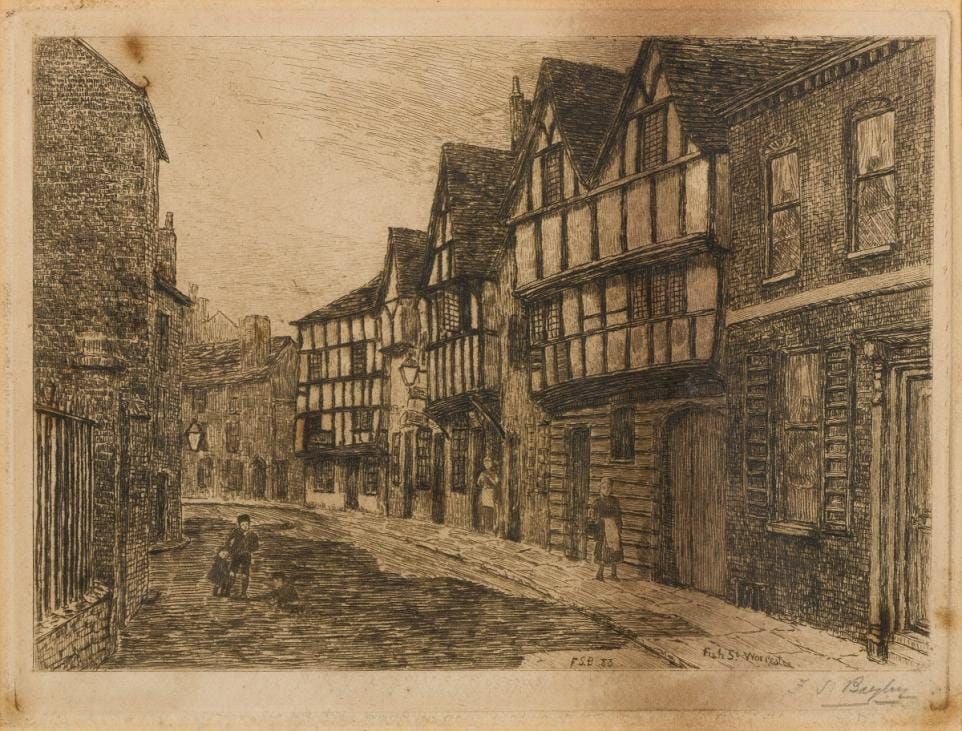
That changed for me the day I stopped to look up. And I mean actually looked: at the timber framing, at the names above the doors, at a street that manages to cram nearly 800 years of Worcester history into a few hundred metres that most people walk through in under two minutes. Since then, Fish Street has become one of my favourite spots in the whole city — not for what it is now, but for the layers of what it's been.
So if you've got ten minutes and you're anywhere near the city centre, this is worth your time. Let me tell you why.

Why is it called Fish Street?
Funnily enough, it wasn't always. Fish Street's original name was Corvisers Lane — a reference to the shoemakers and boot-makers, known as cordwainers or corvisers, who set up shop here first. By the medieval period, though, the cobblers had moved on and the fishmongers had moved in, bringing with them the name the street still carries today. One trade's loss, another trade's legacy.
That trade was strictly regulated, too. Medieval guilds kept like businesses clustered together, and Worcester's fishmongers were confined almost entirely to Fish Street and its immediate surrounds. The rules were exacting: by 1544, a fishmonger caught selling outside the Parish of St Alban's faced a fine of 100 shillings — an enormous sum at a time when a day's wages might amount to a few pennies. You didn't mess around.
"Every fisher paid one penny a day for selling his goods from the King's boards — and a halfpenny to the city swordbearer for every salmon sold."
— WORCESTER PEOPLE & PLACES
Quality control was taken just as seriously as where you sold. Before trading could begin each day, an alderman would walk the length of the street and personally inspect — and smell — every stall. Later, two appointed fishmongers were specifically chosen to assess whether incoming stock was fit for sale. Anything they deemed unfit was confiscated and given to prisoners and the poor. It was an impressively organised — if wonderfully bureaucratic — operation, and it tells you a great deal about how seriously Worcester took both commerce and public health in the medieval period.
The magnificent hall that no longer stands — and the cellars that do
If you'd walked down Fish Street seven hundred years ago, the building you would have stopped to stare at was the Fishmongers' Hall: a magnificent half-timbered structure, dating to the 13th century, anchoring the centre of the street with carved oak barge boards and the kind of timber framing that spoke of real civic pride.
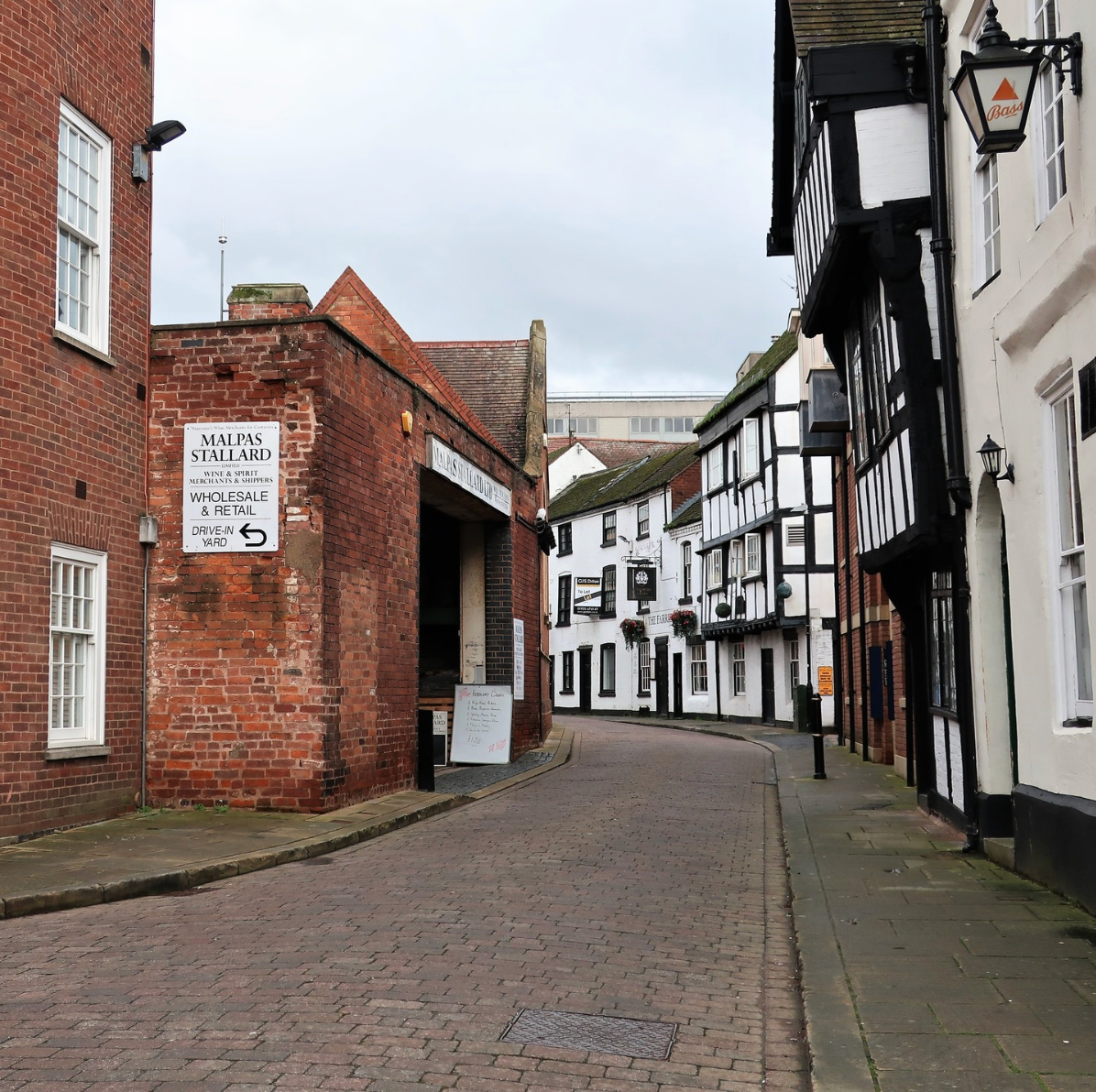
Its end was, sadly, far less dignified. By the Victorian era the hall had been divided into nine cramped tenements — slum housing squeezed into the bones of a medieval landmark. Beneath layers of whitewash, four beautifully carved panels were uncovered in its final years and were sold to Haughton's, the ecclesiastical sculptors who worked nearby. The building itself collapsed at the very start of the 20th century, taking no lives but leaving behind only memory — and, interestingly, the extensive wine cellars that still run beneath the street today.
Those cellars belong to Stallard's, in operation since at least the 1800s, and their unusual depth is explained by the street's proximity to the old Quayside. In 1969 the business became Malpas Stallard Ltd, wine and spirit merchants. Their size and their closeness to the river have long fuelled rumours of underground tunnels running down to the quay — but despite decades of whispered hearsay, none have ever been discovered. Perhaps the mystery is part of the appeal.
Fish Street at a glance
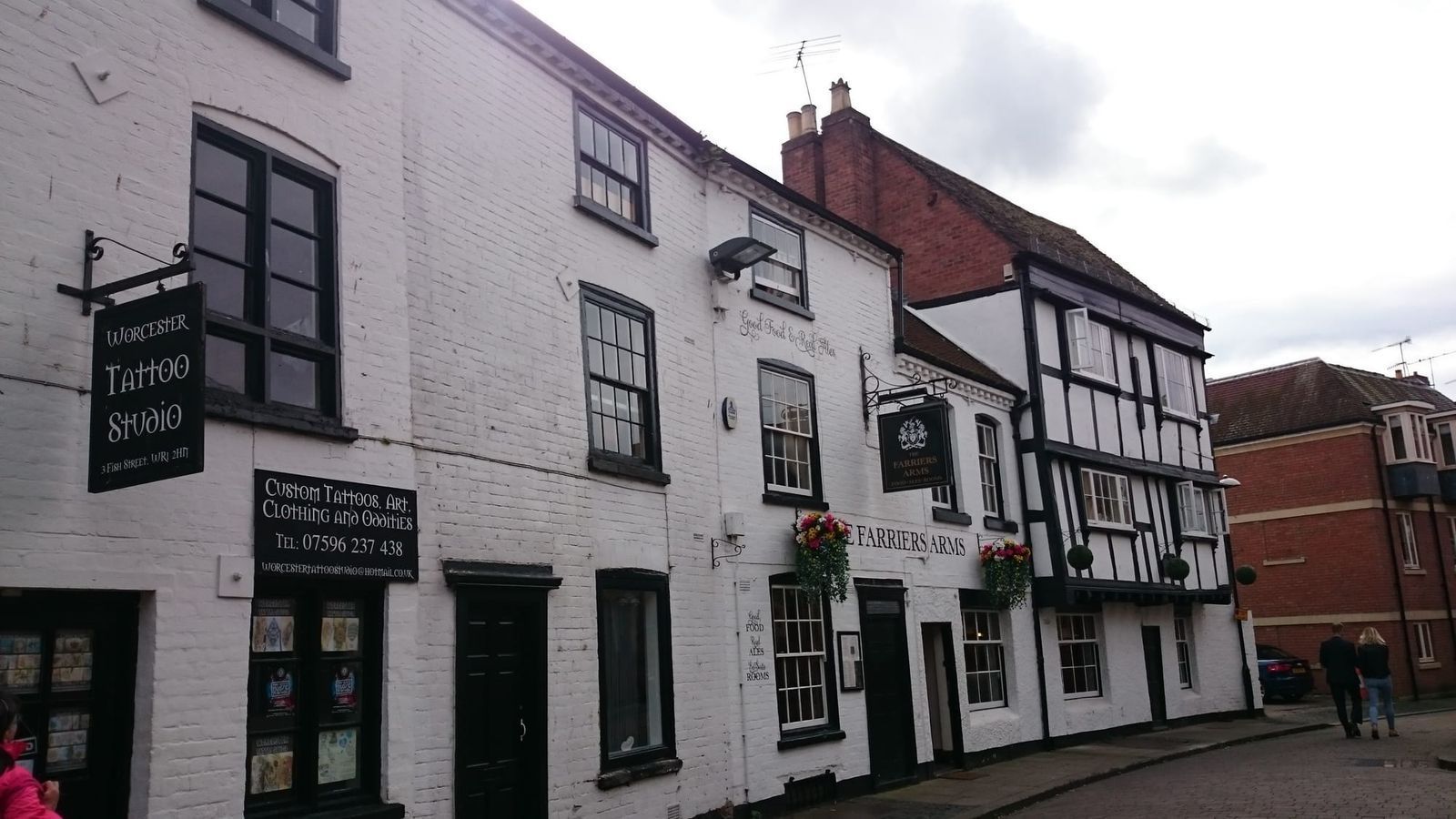
- Two pubs still standing: the Farriers Arms and The Plough, both with roots in the 17th–18th centuries
- Tudor House, opposite Stallard's, was built in 1620 for Humphrey Tyrer
- Stallard's wine cellars beneath the street have operated since at least the 1800s
- The construction of Deansway in the 1930s physically split Fish Street in two
- Rumours of underground tunnels to the Quayside have never been confirmed
- St Helen's, at the eastern end, predates the Cathedral as a place of worship

Two churches, two very different stories
Fish Street was once bookended by two ancient churches. Both are still standing, though what they're used for today couldn't be more different.
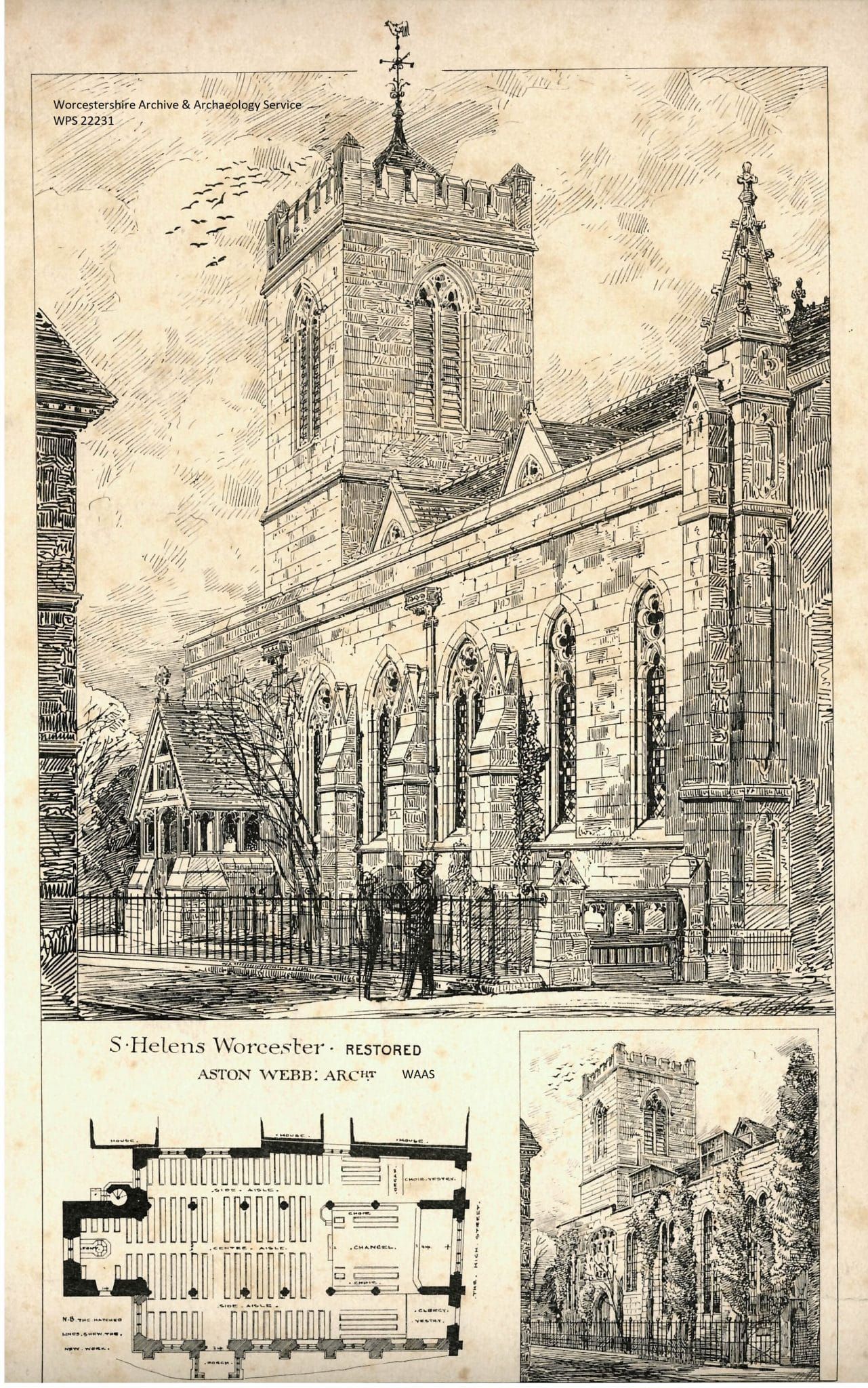
At the eastern end, where the street meets the High Street, stands St Helen's. Its site was used for Christian worship even before the Cathedral — which makes it one of the oldest places of prayer in the entire city. Over the centuries it has served many purposes: a YMCA club during the Second World War, and later the County Record Office. The old Rectory nearby was used as a Sunday School and still stands close by.
At the western end is St Alban's, another ancient church significantly altered in the 18th century. Today it houses Maggs Day Centre, one of Worcester's most important homeless shelters — offering warmth, food, and support to some of the city's most vulnerable people from a building that has been standing for centuries. It is, quietly, one of my favourite corners of old Worcester. There's something quietly moving about a medieval space doing such a modern, human job.

Two pubs worth your time
For all its medieval gravity, Fish Street was also a place people came to enjoy themselves. At its most bustling, the street was home to several pubs. Two survive today, and both are well worth a stop.
The Plough has been here since at least the 1700s, possibly earlier. The Farriers Arms was formed from two adjoining houses much altered over the 17th and 18th centuries, and has traded under several names over the years — including the Archangel and the Oddfellows Arms. If you're doing a walk of the city centre, these are two of the better reasons to slow down.
Just opposite stands Tudor House, built in 1620 for one Humphrey Tyrer. The name is a slight misnomer — the Tudor era had actually ended by then — but it's one of the more handsome buildings on the street, and easy to miss if you're not looking for it.
What happened to the salmon?
The most common catches pulled from the River Severn here were salmon and shad. Both species later all but vanished from this stretch of the river when locks and weirs were installed, blocking their route upstream to spawn. It's one of those small, quiet ecological losses that happened gradually enough that most people never noticed. Thankfully, the addition of fish passes in more recent years has brought these species back to Worcester's stretch of the Severn — so the fish are returning to Fish Street's river, even if they'll never again be sold on it.
A street that kept on changing
The single biggest transformation Fish Street ever underwent came in the 1930s, when the construction of Deansway — in much the form we see it today — literally sliced the street in two. Later, the arrival of the Heart of Worcestershire College beside St Alban's reshaped the western end. The street has been crowded, divided, collapsed, rebuilt, and repurposed over seven centuries — and it is all the more interesting for it. Fairfax House, the most modern building on the street, was constructed at the close of the 20th century, which means Fish Street now spans close to 800 years of architecture in a few hundred metres.
That's what makes it worth more than a two-minute cut-through. Next time you find yourself nearby, slow down. Look up at the timber framing. Notice the names above the doors. Pop into The Plough or the Farriers for a drink and think about the medieval fishmonger who once paid his halfpenny to the city swordbearer on this very spot. Worcester has plenty of history — but Fish Street might just be the most concentrated slice of it in the whole city.

Frequently asked questions about Fish Street, Worcester
Where is Fish Street in Worcester?
Fish Street runs between the High Street and Deansway in Worcester city centre. It was physically split in two when Deansway was constructed in the 1930s, but both sections are easily walkable and worth exploring on foot.
Why is it called Fish Street?
Fish Street was originally called Corvisers Lane, after the shoemakers who traded there. When the fishmongers moved in during the medieval period, the street took on the name it still holds today. The fish trade here was tightly regulated by guilds, with strict rules on where fish could be sold and inspections to ensure it was fit for consumption.
Are there any pubs on Fish Street Worcester?
Yes — two pubs survive on Fish Street: the Farriers Arms and The Plough. Both have roots in the 17th and 18th centuries and are well worth a visit, particularly if you're walking around the city centre.
What happened to the Fishmongers' Hall in Worcester?
The original Fishmongers' Hall, a 13th-century half-timbered building, survived until the start of the 20th century — by which point it had been divided into nine cramped tenements. It eventually collapsed, leaving behind only its wine cellars, which still run beneath the street and are associated with Stallard's wine merchants.
What is Maggs Day Centre in Worcester?
Maggs Day Centre is a vital homeless shelter in Worcester, operating from St Alban's Church on Fish Street. It provides food, warmth, and support to some of the city's most vulnerable people. The church itself dates back centuries and was significantly altered in the 18th century.
Is Fish Street worth visiting in Worcester?
Absolutely. Fish Street is one of the most historically layered streets in Worcester, with connections to medieval trade guilds, two ancient churches, surviving 17th-century pubs, and centuries-old wine cellars beneath the road. It's easy to walk past without noticing — but if you take the time to look around, it's a genuinely fascinating corner of the city.
Staying in Worcester and want to explore more hidden corners like this?
Browse our local guides for the best walks, historic streets, and neighbourhood stories across the city.